Wednesday, September 5, 2012

Three-Dimensional Scans

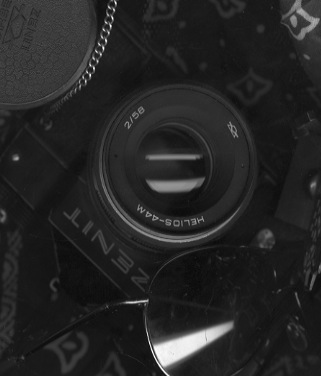
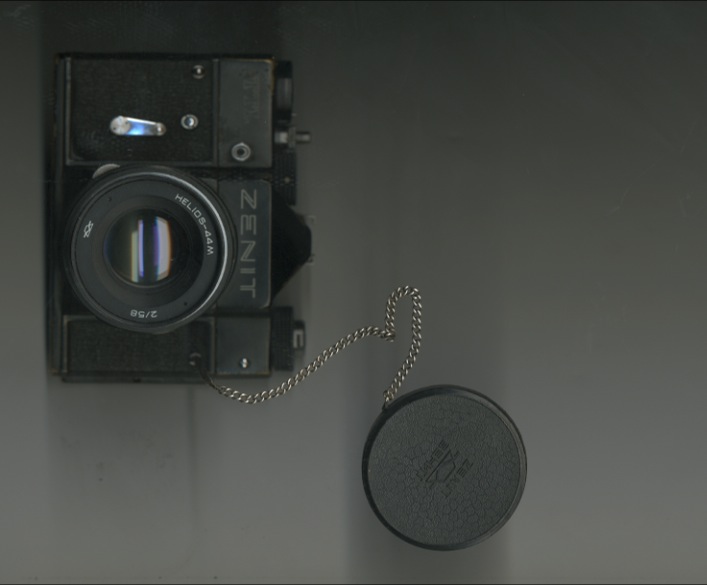
For this series of scans, I wanted to experiment with a wide variety of objects; to push the boundaries of the scanner and use it as a photographer would frame an image, but also in the traditional sense of scanning a two-dimensional object, which I have disappointingly little experience with.  As a result, these scans form a sort of displaced examination of the objects I happened to have in my bag at the time.  They are all quite personal to me, and have some sort of meaning in one way or another, but the question would be, is this still portrayed through this bland, naked examination of these objects, against a stark white background?  Will the viewer realize the personality in each item, or is that stripped by the complete lack of visually contextual background?  This is a question I would like to think about in the upcoming collage project. 


For this last image, I wanted to explore and push the boundaries of the scanner, and think of it as a giant camera, to create an inverted, three-dimensional image that uses negative space to draw the viewer's eye around the work.  It is a collage of some sorts I suppose, although it consists of objects in my possession alone, and therefore would not be acceptable to submit as my collage project's final product.  However, perhaps it is a new idea for me to continue exploring?

Tuesday, September 4, 2012

Pixel Art: Image #1 (non-animated)


For my first attempt at a pixel drawing, I was originally completely stuck as to what direction I wanted to proceed in.  I ended up favoring a type of image based more upon the idea and a collision of artistic genres than a purely illustrative work, and an expression of my personal interests immediately became an inspiration.  I have a deep interest in musical composition, and while brainstorming a subject for my pixel drawing, I noticed that the extremely small, pixelated resolution of the blank photoshop document I was looking at on my monitor was not unlike a simple digital, graphic-based step-sequencer used in basic music production.

I Googled step-sequencer images, and I quickly found a free, online step-sequencer that I could use to patch together my pixel image, and use as a "musical translator" of sorts; effectively transforming musical expression into graphic expression.  The sequencer can be found at this link: http://tonematrix.audiotool.com/ and is very useful for experiencing the work in its full potential; i.e. hearing, as well as seeing the work.

Thusly, for my pixel art, I have created a visual representation of a musical phrase.  It is a simple, interactive piece that I feel encourages viewer interaction--I am hoping the viewer will use his or her computer to travel to the sequencer website, and using my work as a template, simply graphically transcribing my notes onto their own browser; allowing them to hear as well as see the work.  Perhaps this may even ignite an artistic conversation of sorts, as they build their own musical melody, and transcribe it in the same fashion, allowing others to share their creation graphically as well as musically.


Thursday, May 3, 2012

Untitled (i'm feeling lucky #4)

Untitled (i'm feeling lucky #4)

This project is a direct response to the contemporary artistic discussion regarding the notion of globalism and the increasingly virtual world in which we live.  It is a response most directly to Bishop, and her attitude towards art as being elevated, or separate from society.  In this work, I paralleled this method of artistic creation by forcing the viewer to have access to a particular form of modern technology--or the work is simply inaccessible to them.  This division of "selective viewing" makes a poignant statement towards the increasingly virtual society in which we live, and the way how this very society, as well as this work, forces the individual to adapt, in the form of technology.  The process I used also responds to John Cage's affinity towards the Zen method of incorporating chance within his work.  Each of these 26 symbols are a type of "code alphabet", that links the viewer, or participator, to a web page that starts with a letter within the traditional alphabet.  Using the "I'm Feeling Lucky" and "Autofill" features on the search engine Google, I typed in the letter of the alphabet I desired, and selected the 4th option down, regardless of personal bias.  The work thusly becomes less of the destination the code leads the viewer, but the actual effort and technological affinity required to even fully understand the work.


Monday, April 2, 2012

3' 44'' (Step Back)

My work, entitled 3' 44'' (Step Back), is heavily inspired by the ideas and compositions of John Cage, an experimental music visionary. In creating this work, I carefully focused upon and responded to Cage's idea of chance as a variable in the composition of music, by layering two separate sound recordings over one another, allowing no bias or control over the alignment, tempo, dynamics, harmony, etc. In doing this, I gave up acoustic control as the artist, leaving the most important decisions of musical composition almost completely up to fate. The only element of control I claimed over the finished piece was the length of the composition itself, which I strictly regimented to exactly 3 minutes and 44 seconds, a symbolically-driven reference to Cage's famous "silent" piece, 4' 33'', once again in spite of any acoustically-concious decision-making. I was inspired to this name by yet another idea of Cage's, the idea that there is no such thing as complete silence, and music can mean more than the term as it is commonly used. Music is all around us, as reflected by the profound moment of realization I had while undertaking this project; that sometimes the most beautiful music is the most subtle. Even on the unsightly (and unsoundly) D.C. Metro, was music to be found.

http://soundcloud.com/aychillson/3-44-step-back